Career Opportunities

ATLAS™ Secure Cloud Services
A New Way to Manage Projects

Newsletter 119
Read Now

How To Videos
A Look at Case Studies Assessing Performance and Reliability in Complex Foundation Systems
Modern airport construction demands exceptional performance from deep foundations. Terminals, parking garages, and multi-story support structures must withstand heavy loads, long service lives, and strict performance criteria-often while construction schedules remain tight. To meet these demands, engineers increasingly rely on advanced integrity testing methods to confirm foundation quality early and efficiently. The following case studies highlight how integrity testing technologies were applied utilizing quality assurance solutions from Pile Dynamics, Inc. (PDI), on major U.S. airport projects, each with distinct foundation systems and construction challenges.
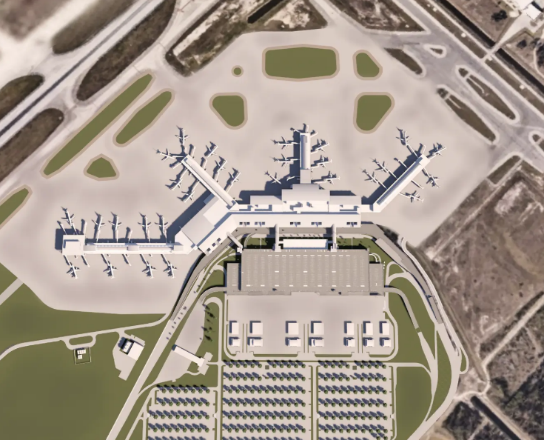
Mobile International Airport – Mobile, Alabama
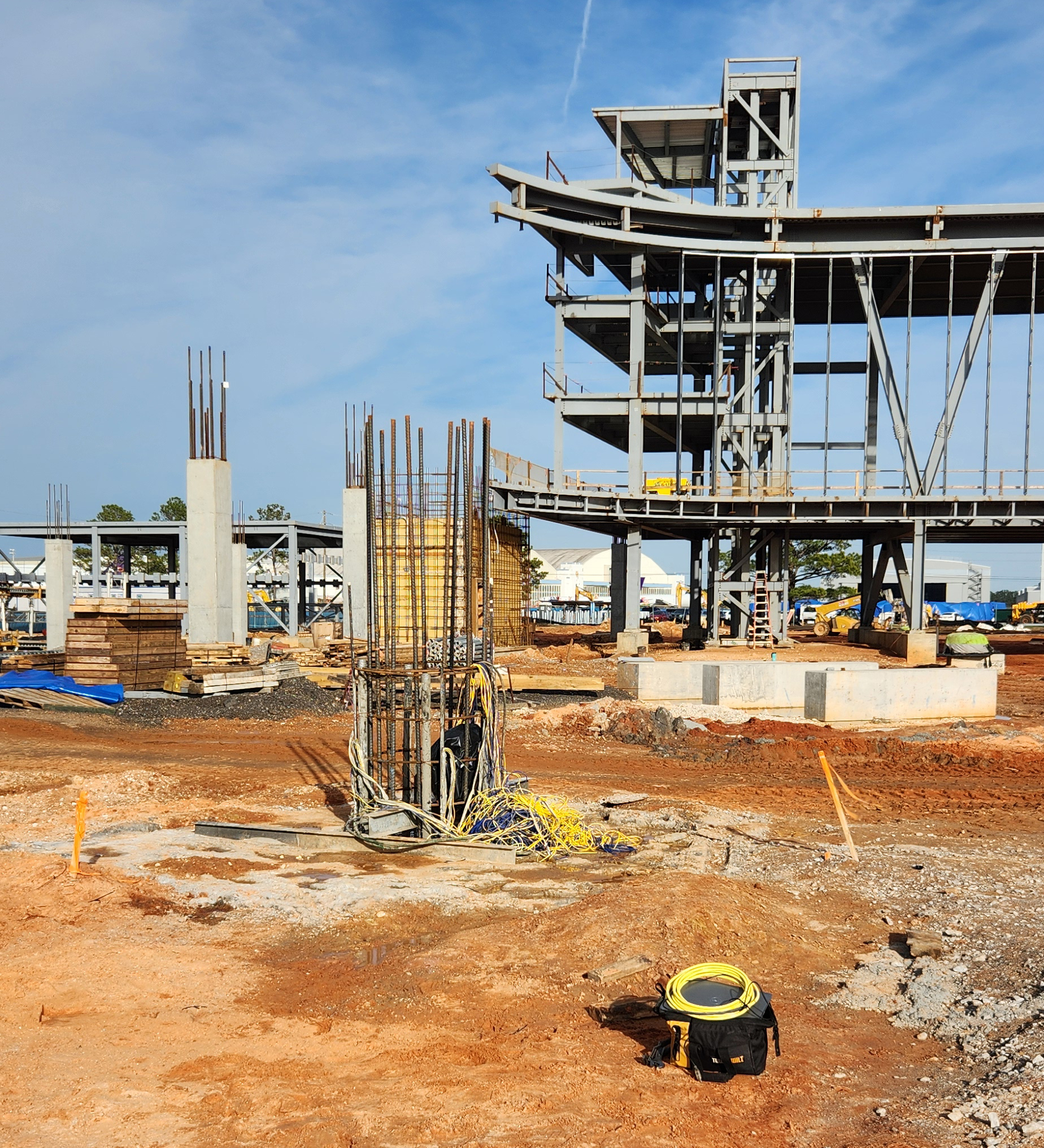
As part of a major expansion at Mobile International Airport, a new terminal and a five-story parking garage were constructed to support growing passenger demand. The terminal was designed with five new air gates and future expansion capacity up to twelve, while the parking structure added 1,250 spaces. Given the size and importance of these structures, drilled shafts were selected to support the deep foundation system. To assess shaft integrity during construction, two production shafts were installed using the Thermal Integrity Profiling (TIP) method. PDI’s Thermal Wire® cables were installed along the full length of each rebar cage to monitor temperature changes as the concrete cured.
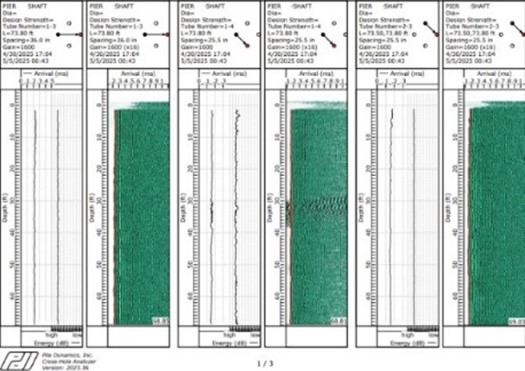
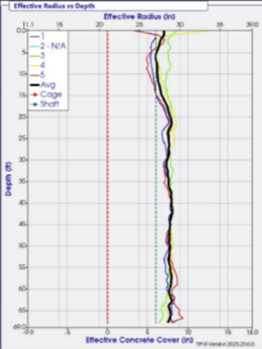
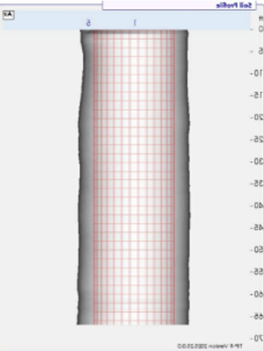
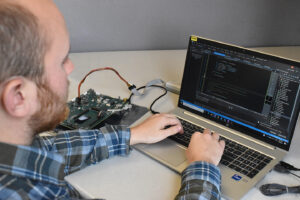
In parallel, Crosshole Sonic Logging (CSL) was specified to further evaluate concrete quality. Steel access tubes were installed in each shaft, and testing was performed using Pile Dynamics’ Cross Hole Analyzer (CHAMP-Q) Figure 1. The drilled shafts measured approximately 54 inches in diameter and extended between 65 and 80 feet below grade. With the efficiency of TIP testing, data was transmitted to the ATLAS™ secure cloud in real time and the full analysis was available shortly after peak curing temperatures were reached. TIP temperature profiles provided insight into concrete uniformity and effective shaft geometry during the earliest stages of curing. Figures 2 & 3.
After three to seven days of curing, CSL testing was conducted by lowering the CHAMP-Q transceiver probes through the access tubes. As the probes were raised together, sonic pulses were transmitted and received across tube pairs while digital encoders recorded precise depth measurements. The resulting data produced waterfall diagrams, first arrival time plots, and signal strength profiles, allowing engineers to assess concrete consistency and identify potential anomalies.
This rapid turnaround allowed construction teams to confirm shaft acceptance quickly and proceed with confidence, minimizing delays on this fast-paced airport project.
Southwest Florida International Airport – Fort Meyers, Florida
At Southwest Florida International Airport, foundation demands were driven by the construction of a new terminal designed to serve between 10,000 and 15,000 passengers per day. Augered-Cast-in-Place (ACIP) piles were selected for the deep foundations due to their efficiency of installation and the favorable soil conditions making the ACIP piles the optimal choice.
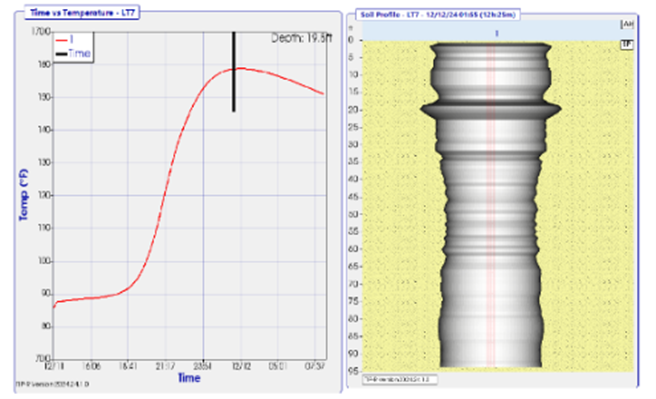
Integrity testing played a critical role in quality assurance across this large production pile program. Thermal Integrity Profiling (TIP) was performed on approximately five percent of the piles—roughly 130 in total. For each instrumented pile, a single Thermal Wire® cable was installed along the full length of the center reinforcing bar. Once grout placement was completed, a TAG and TAP-Edge data logger was connected to begin real-time data acquisition. Temperature data from the piles was available both onsite and remotely through ATLAS™ Secure Cloud Data Management, allowing engineers to monitor curing behavior shortly after installation. Within a few hours after concreting, results were available to assess concrete integrity, identify potential anomalies, and determine whether corrective action was needed. Figure 4.
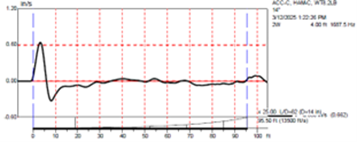
In addition to TIP, Low Strain Integrity Testing was performed using Pile Dynamics’ Pile Integrity Tester (PIT) on selected ACIP piles where TIP had not been utilized. The piles had a nominal diameter of 14 inches and extended approximately 94 to 95 feet in length. Testing involved applying hand-held hammer impacts, with hammer sizes ranging from 2 to 12 pounds to the top of each tested pile to optimize signal quality. Interpretation of the PIT results was limited to the approximate top half of the pile given the large length to diameter ratio of the tested piles. Real-time velocity plots allowed engineers to quickly identify any significant integrity concerns in the upper portion of the piles. Figure 5.
PIT testing provided rapid screening of pile integrity on randomly selected piles, while TIP delivered a more detailed assessment along the full pile length within hours of pile completion. Together, these methods quickly assessed foundation performance without disrupting construction progress.
John Glenn Columbus International Airport – Columbus, Ohio
John Glenn Columbus International Airport (CMH) is undergoing a $2 billion, multi-year expansion, anchored by a new 1 million-square-foot terminal scheduled to open in early 2029. The project, designed to handle over 13 million annual passengers, includes 36 new gates, a central marketplace, and a 5,000-space parking garage. The Airport’s Midfield Terminal project consisted of construction of a new two-story terminal with mezzanine and a pedestrian bridge over the departures roadway that will connect to a future parking garage via pedestrian walkways. Additionally, a multilevel terminal front bridge provided access to and from the terminal. The project was designed to comply with the U.S. Green Building Council’s “Leadership in Energy & Environmental Design (LEED) Rating System” certification level as specified in Section 01 81 13 “Sustainable Design Requirements.”
The multilevel terminal front bridge was supported by 60″ and 72″ drilled shafts under the piers and 14″ ACIP piles at each abutment. GRL Engineers, Inc. performed TIP, PIT, SLT, and HSDLT for the abutment ACIP piles. Two demonstration shafts were installed and PDI’s Thermal Integrity Profiler (TIP), Cross Hole Analyzer (CHAMP-Q) and Pile Driving Analyzer® (PDA) with DLT software were used to perform quality assurance testing on one 60″ and one 72″ diameter shaft.
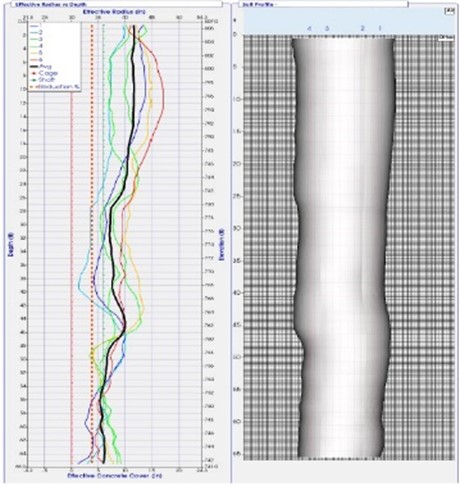
Testing of production shafts included TIP testing (Figure 6.) for all shafts in both the terminal building and front bridge. An additional 225 piles on the terminal building portion of the project included PIT tests which were supported on 24” diameter ACIP piles. The entire test program, designed by GRL Engineers, was accepted by the airport representatives. This testing program proved to be effective and efficient for the project, minimizing scheduling risk and allowing the project to continue on schedule.
Project Outcomes and Value
Across these airport projects, integrity testing enabled early assessment of foundation quality, reduced uncertainty and risk, and supported timely acceptance of deep foundation elements. The combination of TIP, CSL, and PIT provided complementary insights—ranging from real-time screening to detailed full-length assessments—tailored to each foundation type. By leveraging ATLAS™ Secure Cloud Data Management, project teams were able to review results remotely, accelerate decision-making, and mitigate the risk of costly delays. These case studies demonstrate how modern integrity testing methods play a vital role in delivering safe, durable, and efficient airport infrastructure.

Mobile International Airport
Client: A.H. Beck Foundation, Co. Inc.
Location: Mobile, Alabama
Testing Methods:
Southwest Florida International Airport
Client: R.W. Harris, Inc.
Location: Fort Meyers, FL
Testing Methods:
John Glenn Columbus International Airport
Client: Beaver Excavating – Terminal Front Bridge, Richard Goettle, Inc. – Terminal Building
Location: Columbus, OH
Testing Methods: