Career Opportunities
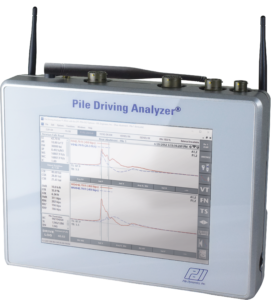
Pile Driving Analyzer® (PDA) System
High strain dynamic load testing and pile driving monitoring system. Perform dynamic load testing on most types of deep foundations.
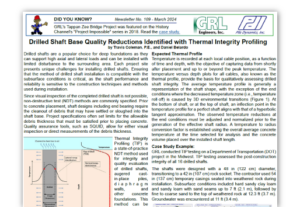
Newsletter 109
Read Now

Free Webinars




Have a technical question? Ask our team of engineers.
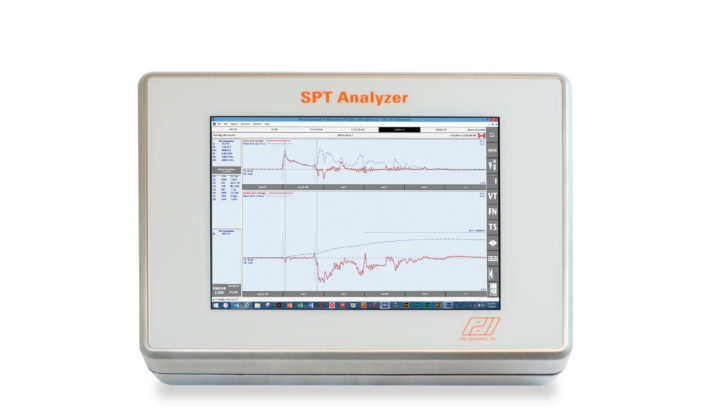
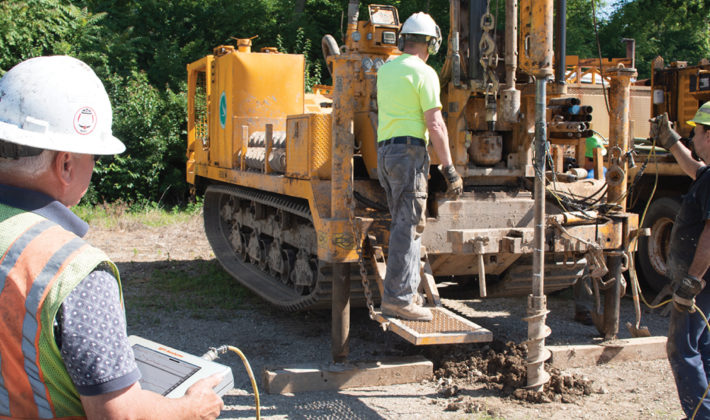
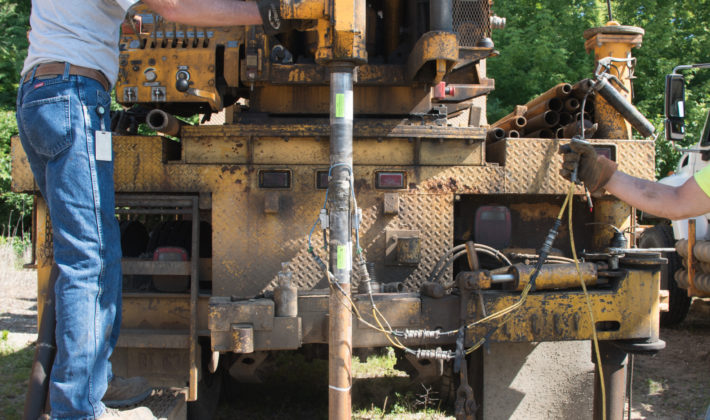
Request a quoteThe SPT Analyzer measures the energy transferred into an instrumented SPT rod during a Standard Penetration Test (SPT). This permits the adjustment of the measured N-value to the normalized N60 for standard 60% energy transfer into the rods in accordance with ASTM D4633. Compensating for widely variable efficiencies from different SPT rigs and hammer types improves the reliability of soil strength estimates used in geotechnical designs.
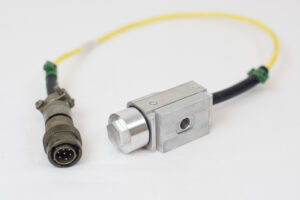
This instrument includes a subassembly of an SPT rod that is instrumented with two strain gage bridges and two piezoresistive accelerometers. These sensors obtain the force and velocity signals necessary for the calculation of transferred energy and transfer them to the SPT Analyzer.
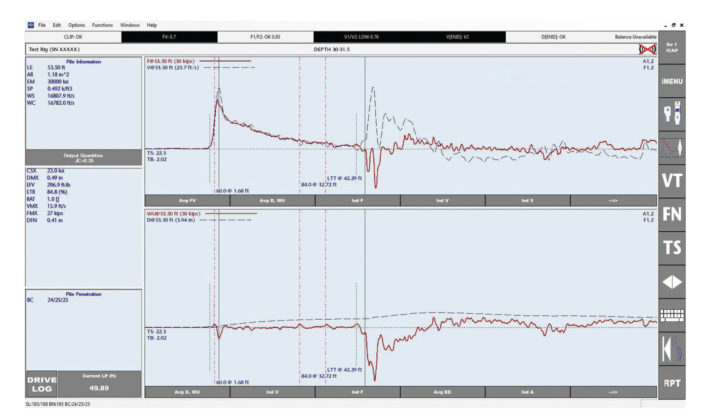
The latest model of SPT Analyzer has a touch screen visible in all lighting conditions and responsive to gestures like pinch and zoom. Data analysis and reporting have been substantially updated for ease of use and faster output.
The SPT Analyzer is compliant with EN ISO 22476-3:2005. ASTM D1586 recommends normalizing results from any SPT test using energy measurements. When these tests are performed to determine the liquefaction potential of sands, D6066 not only recommends but mandates the normalization. ASTM D4633 states that the only acceptable method of determining energy for normalization of N values is by force and velocity measurements.
Physical
Size: 320 x 250 x 68 mm (12.6 x 9.8 x 2.7 in)
Weight: 5 Kg (11 lbs.)
Temperature range: Operating: 0 to 40°C (32 to 104° F); Storage: -20 to 65°C (-4 to 149° F)
Display: 26.4cm (10.4 in), sunlight readable, resolution 1024 X 768
Built in capacitive touch screen
Video Outputs: HDMI
Power: 4-hour continuous data collection battery pack, 12 VDC car battery, or 100-240 VAC. Extra battery pack supplied.
Charging time: 6-hour maximum
Electronic
Microsoft Windows® 10 Operating System
A minimum of 128 GB SSD internal drive
Ethernet port
4 USB ports
Analog signal conditioning filtering (frequency response) 5 KHZ (-3 dB)
16-bit A/D converter with sampling frequency of 10.24 MHz
4 channels with effective digitizing frequency of up to 100 KHz resulting in user selectable total sample time 82 to 205 milliseconds
Basic unit accuracy 2%
Functional
Built in calibration test function
4 channels of traditional (cabled) data acquisition, universal (strain or acceleration on any channel)
Compatible with traditional (cabled) Smart Sensors
Automatic balancing of signals and signal conditioning
Digital (software) integration of acceleration
Signal conditioning for force and acceleration have similar frequency response
Internal calibration check of strain and acceleration
Signal amplification capability
Other
Operates in English, SI, or Metric units
Optional external USB keyboard, mouse, and WiFi (802.11b,g,n) available
Includes both soft side carry-on luggage case and hard transit case
Equipped for remote technical support using SiteLink®
Optional TeamViewer desktop sharing software license for use with SiteLink® Technology
Furnished with license for PDA Software Suite (PDA-S, PDIPLOT2 and PDI Curves)
Full one-year warranty
Technical manual provided in PDF form on a USB drive
The SPT Analyzer includes a full warranty and technical support. PDI offers expert training in the use of the SPT Analyzer

 PDI Family Brochure
  SPT Analyzer in the News