Career Opportunities
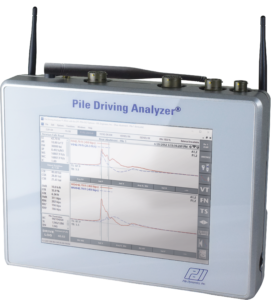
Pile Driving Analyzer® (PDA) System
High strain dynamic load testing and pile driving monitoring system. Perform dynamic load testing on most types of deep foundations.
Newsletter 109
Read Now

Free Webinars
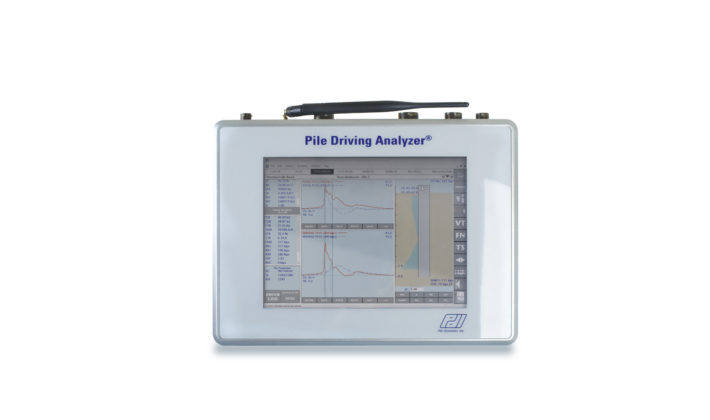
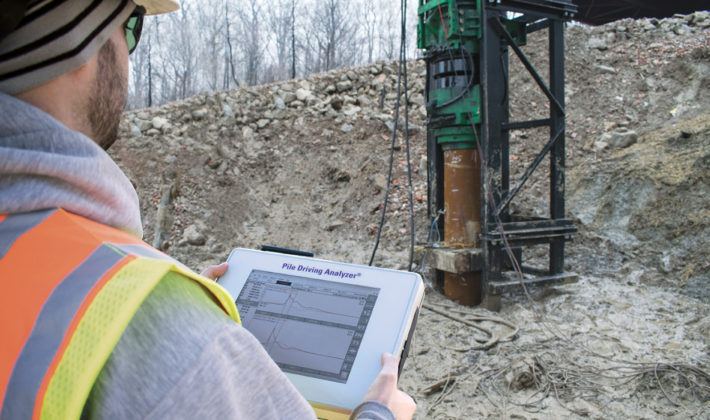
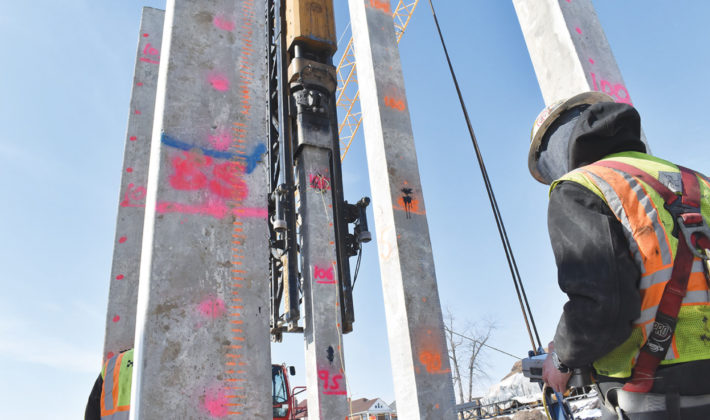
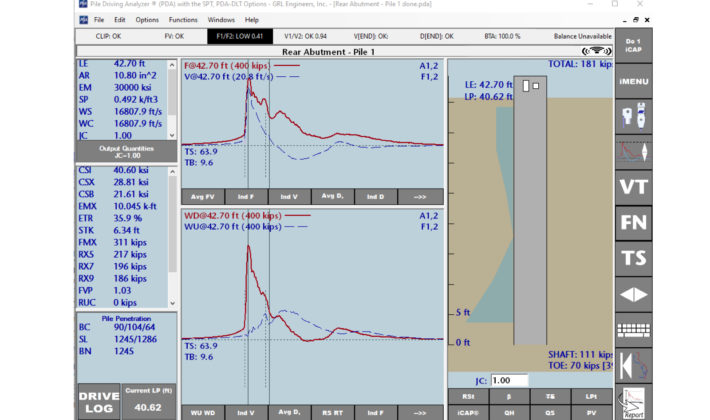
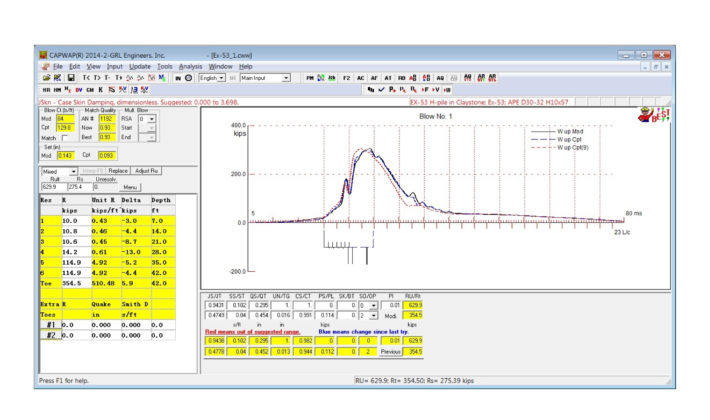
High strain dynamic load testing and pile driving monitoring system. Perform dynamic load testing on most types of deep foundations.
Have a technical question? Ask our team of engineers.
Request a quote FAQsThe Pile Driving Analyzer® (PDA) system is the most widely employed system for Dynamic Load Testing and Pile Driving Monitoring in the world. High Strain Dynamic Load Tests, also called PDA tests, assess the capacity of several piles in a single day. Pile Driving Analyzer systems also evaluate shaft integrity, driving stresses, and hammer energy when monitoring installation. If you plan to use your PDA to test non-driven piles make sure to read about that application as well.
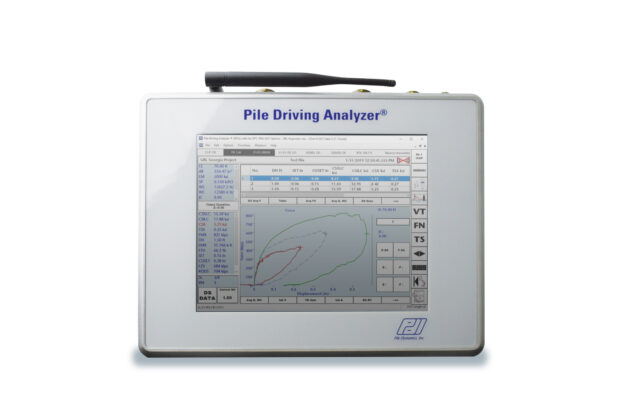
The PDA Model 8G is the culmination of a complete redesign effort that incorporates the latest technological innovations and truly embodies Pile Dynamics’s commitment to quality. The PDA-8G looks sophisticated, as so is the software that powers it. Thin, light and ergonomic, it features touchscreen gesture controls like swiping and pinch-to-zoom. The PDA-8G offers up to 16 universal channels of data acquisition, all capable of reading data from Smart Sensors in traditional (cabled) or wireless mode. This functionality allows for extreme pile testing flexibility. Improved data transfer makes it easier to test hydraulic hammers with high blow rates.
PDA tests are performed during driving on pilot or production piles, taking advantage of the high strain impact provided by the driving hammer. Re-strike PDA tests are often recommended; if the driving hammer is no longer on location, a drop weight may be used to impact the pile.
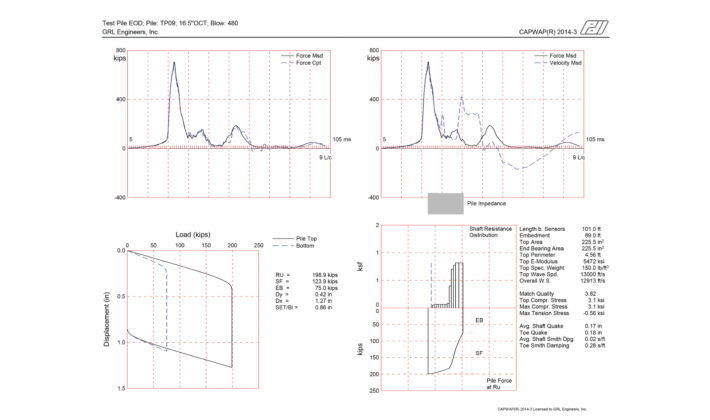
The PDA-8G takes data obtained by accelerometers and strain transducers easily attached to the pile and calculates foundation capacity. In addition, it calculates multiple important quantities by the Case Method and iCAP®. iCAP computes capacity in real time after every blow by signal matching (similar to CAPWAP®). This calculation is often more accurate than Case Method capacity and better evaluates stresses in the pile.
With the PDA-8G, the engineer has the option of being in the field for the pile driving test or of using SiteLink® Technology. SiteLink technology transmits PDA test data via Internet to an engineer located elsewhere who follows the test in real time. Test data displays and results are identical in both modes.
The PDA-8G is furnished with the PDA Software Suite, CAPWAP and GRLWEAP. CAPWAP analysis of PDA data is essential for a Dynamic Load Test. It provides the soil resistance distribution along the foundation and simulates a static load test. Extensive correlations between CAPWAP simulated and actual static load tests have proven the reliability of this method of determining pile capacity.
The PDA-8G conforms to ASTM D4945 and many other codes and specifications. The PDA Software Suite, consisting of PDA-S with iCAP, PDIPLOT2 and PDI-Curves, outputs reports that satisfy ASTM 4945 requirements. An SPT Software add-on to the PDA-S enables the PDA-8G to determine the energy transferred to SPT rods (read about this application).
Pile Dynamics recommends that all those who perform dynamic tests using the PDA take the Dynamic Measurement and Analysis Proficiency Test offered by PDI and PDCA. Read about the need for quality testing.
* The PDA-8G is patented under the Remote Pile Driving Analyzer US Patent No. US 6301551 B1
Physical
Size: 320 X 250 X 68 mm (12.6 x 9.8 x 2.7 in)
Weight: 5 Kg (11 lbs.)
Temperature range: 0 to 40°C (32 to 104° F) operating; -20 to 65°C (-4 to 149° F) storage
Display: 26.4cm (10.4”), sunlight readable, resolution 1024 X 768
Built in capacitive touch screen
Video Outputs: HDMI
Power: 4-hour continuous data collection battery pack, 12 VDC car battery, or 100-240 VAC. Extra battery pack supplied.
Charging time: 6-hour maximum
Electronic
Microsoft Windows® 10 or higher Operating System
Minimum of 128 GB SSD internal drive
Ethernet port
4 USB ports
Analog signal conditioning filtering (frequency response) 2.5 KHZ (-3 dB)
16-bit A/D converter with sampling frequency of 10.24 MHz
8 channels with effective digitizing frequency of 10 KHz to 40 KHz selectable
1K, 2K, or 4K data record sizes available
Basic unit accuracy 2%
Functional
Built in calibration test function
Compatible with PDI Smart Sensors
Wireless range up to 100 m (328 ft)
Up to 16 universal (strain or acceleration, piezoelectric or piezoresistive) channels of wireless data acquisition1
Up to 8 universal (strain or acceleration, piezoelectric or piezoresistive) channels of traditional data acquisition
Piezoresistive accelerometer for high frequency and high acceleration events such as SPT, or steel on steel impacts
Piezoelectric accelerometer is more cost effective and useful in most other pile driving applications
Automatic balancing of signals and signal conditioning
Digital (software) integration of acceleration
Signal conditioning for force and acceleration have similar frequency response
Internal calibration check of strain and acceleration
Signal amplification capability
Triggers on any attached strain transducer
User adjustable pre-trigger buffer size
High speed internet data transmission using SiteLink® Technology through broadband phone or other network device (additional desktop sharing software needed)
Data transmission through data capable mobile phone connected via USB
1 limited to one piezoelectric accelerometer per box
Other
Operates in English, SI, or Metric units
Includes external USB keyboard, mouse, and WiFi (802.11 b,g,n)
Includes both soft side carry-on luggage case and hard transit case
Equipped for remote technical support using SiteLink® Technology
Available TeamViewer desktop sharing software license for use with SiteLink Technology
Furnished with licenses for PDA Software Suite (PDA-S, iCAP®, PDIPLOT and PDI Curves), GRLWEAP and CAPWAP®
Full one-year warranty
Technical manual provided in PDF form on a USB drive
The PDA includes a full warranty and technical support. PDI offers expert training in the use of the PDA.
Related Products
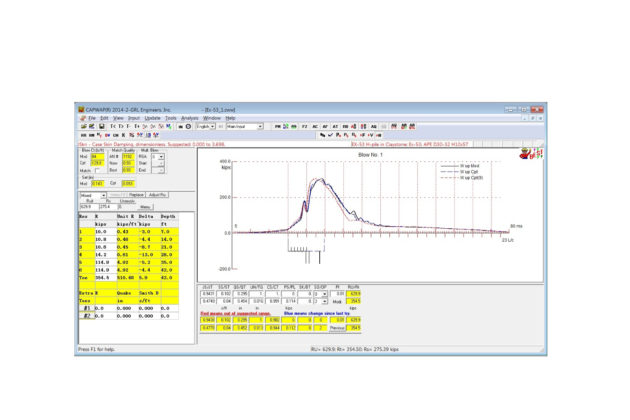
CAPWAP® (Case Pile Wave Analysis Program) Signal matching software that uses force and velocity data…
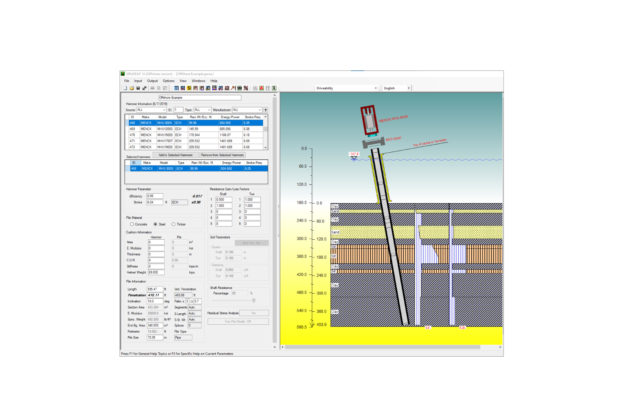
GRLWEAP14 is the pile driving simulation software of choice worldwide for pile driving professionals: Simulates…
The PDA-DLT monitors high strain dynamic load tests on drilled shafts and bored piles using…

 PDI Family Brochure
  PDI WAVE Demonstration